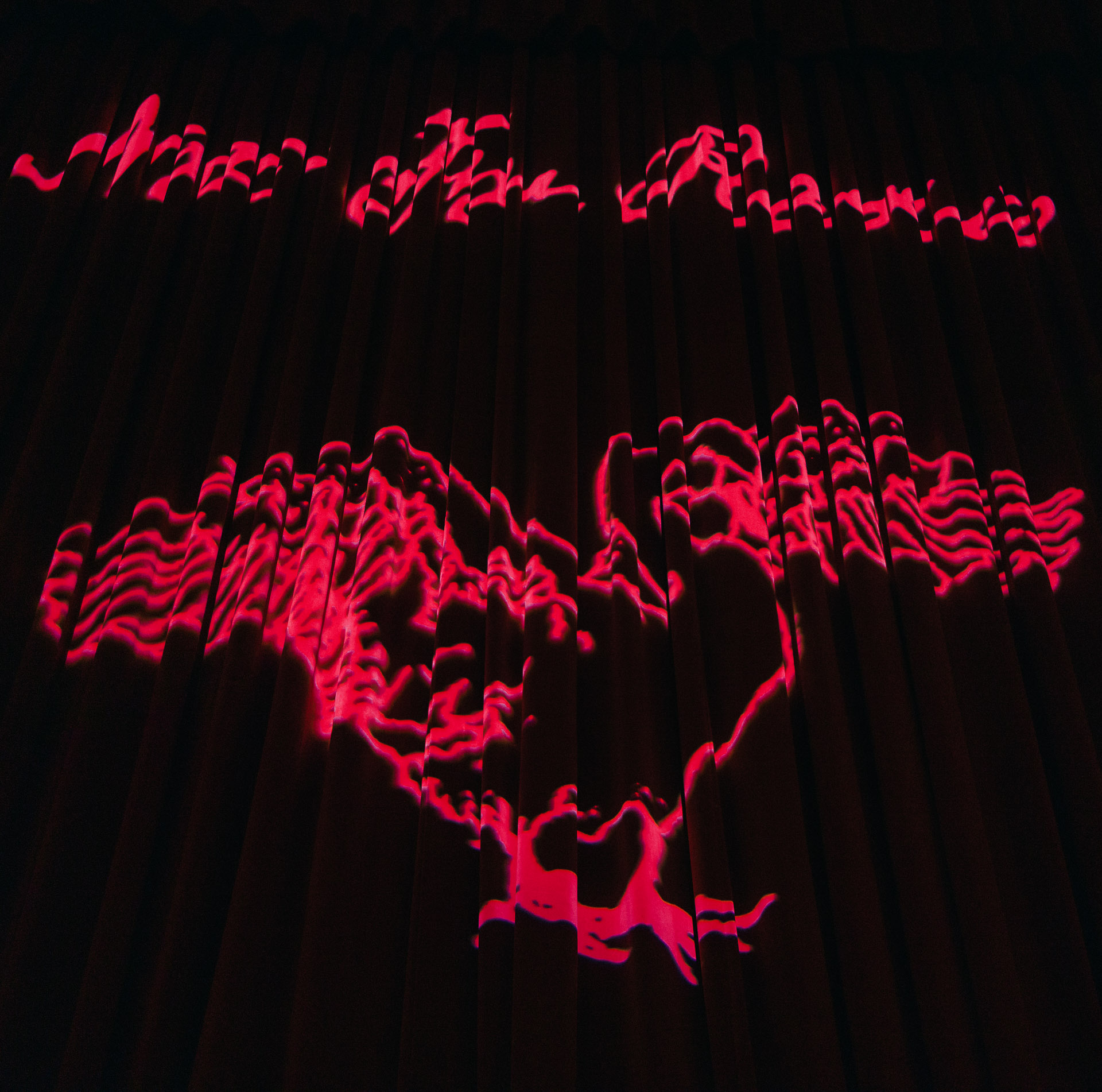
Drones, Algorithms, and Identity: Inside Benny Steven’s Response to the Hyper-Digital Era
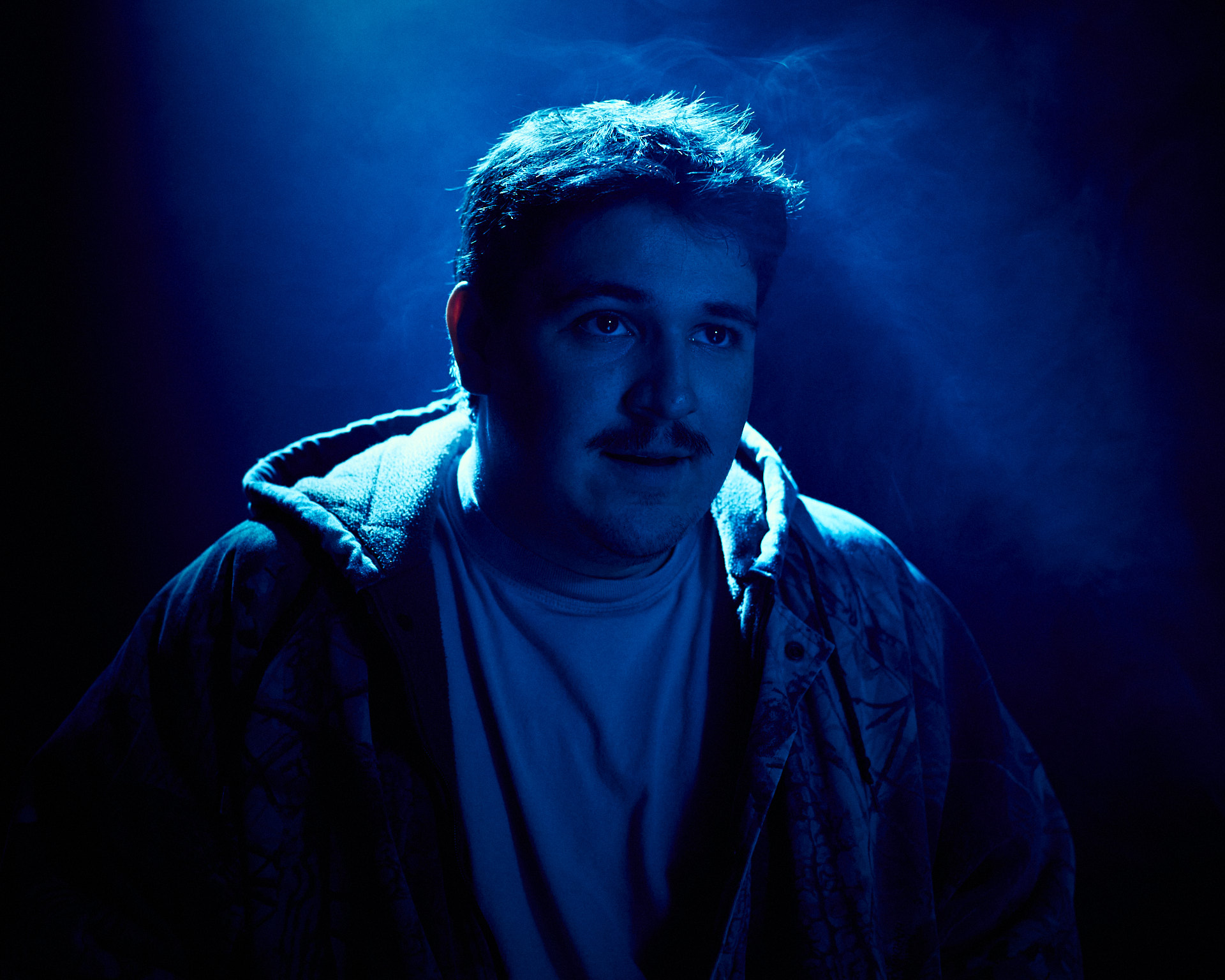
Musician Benny Steven discusses his upcoming album Ergo Masterpiece Melodrama, critiquing hyper-digital overwhelm and advocating for personal stewardship over online anxiety. He also reflects on his cathartic creative process, explaining how grounding his self-worth in faith and real-world relationships keeps his art in healthy perspective.
The following conversation between In Bloom's Diego Frias and musician Benny Steven has been edited for brevity and clarity.
Diego: We're here with Benny Steven. Thank you very much for being with us. I'm really looking forward to this conversation.
Benny: Thank you for having me.
Diego: I understand you're in the process of finishing an album.
Benny: It's called Ergo Masterpiece Melodrama.
Diego: Can you tell me a little bit about what inspired this album?
Benny: It’s about how we're living through probably like the most digital age that we've ever seen before, and that it's difficult to tell what's real or not, and what I feel is the only way, to step outside of that.
To me, every issue that's happening in the world, every single thing that's going on, and everything everyone is talking about everywhere, on every app, is a form of having a town crier letting you know what's going on in the village square. Except you can't even see the town crier with your own eyes, and he's on a camera, and you've never seen the village square before, and also they're a thousand miles away, and you're living in a time where somebody could flawlessly and undetected make up all of that stuff with a prompt. And you don't know if it's real or not.
The thing that holds all the concepts together is that it's about things that you can't control, you know? You see things on your phone—terrible things, shooting here, bomb dropped there—to the point where it kind of desensitizes you to any real emotional understanding of what's going on.
Diego: Right.
Benny: Not even just because of AI. Your perspective and values are informed by people you’ve never met before. You’ve never had a conversation with them. People have strong opinions on isolated events they weren’t there to witness. You don't know what's going on. All you did was open your "For You" page, you know? The record talks about that. I talk about seeing drones in the sky. I’m definitely pointing fingers and talking about things that are going on. The record is as critical of the internet and of the internet age as it could be without turning into a political record.
The thing that holds all the concepts together is that it's about things that you can't control, you know? You see things on your phone—terrible things, shooting here, bomb dropped there—to the point where it kind of desensitizes you to any real emotional understanding of what's going on. And people don't know how to care about it and also let go of the fact that they actually can't do anything to affect it. That's the truth. There's certain things that are above you. And it's like, "Well, does it mean it's giving up just to say, 'Oh man, that's above... Whatever, I can't do anything'?" I don't think so. I think that actually lets people move forward with like, "Okay, I can't control this, but I can control this smaller thing, and maybe through a stair step of events, it can make that big thing get better over time."
Diego: What’s the alternative?
Stewardship is recalibrating my attention from what I can’t control to what is under my responsibility over here.
Benny: I think that's just a concept that people struggle with in general. But I mean, I frame myself that way too in my record. It's not like a record of like, "People don't know how to do this, and I know how to do it, and I have the answer and no one else does." I think Christian people can frame themselves like that sometimes. Like, "Oh yeah, now that I'm a Christian person, I understand what's really going on, and I have the real answers." I think there's just certain stuff that's beyond me. In the Christian language, you'd say, "How can I steward what's around me? What can I do with what I have?" Because I think people already feel helpless, and a lot of us just lock up, and we become kind of inert, racking our brains trying to figure out a way to fix something that we can't fix.
Diego: You talk about the Christian concept of stewardship. What does that stewardship look like or what does that mean for you?
Benny: We're not born with anything, and we don't take anything with us when we leave. You know, I have friends, but they don't belong to me. I interact with them, and I can selflessly make their lives better by being sacrificial. And in a nice friendship, they'll do that back, and it's just this like, "Oh man, no, I'll pay for it," "No, you pay for it," you know, that kind of thing. I don't own anything, but there are things that are under my responsibility. And in taking my eyes off of those things and getting distracted, I don't take good care of them. I abandon them for something beyond me that I can't do anything about. And in your rumination and in your fear and anxiety, you've forgotten the things that are actually under you. There's people who look up to you, who ask you for advice, there're people who are beside you who need your support, there're people that you need to go to to get wisdom about things that you don't understand. Stewardship is recalibrating my attention from what I can’t control to what is under my responsibility over here. Does that make sense?
On a larger scale, if more people focused on [stewardship], then maybe you could affect something that's larger.
Diego: Yeah. We don't come in with anything, we don't take anything back, but you can always leave it better than you found it. Another thing I'm hearing you talk about, is connection. That you can't honestly connect to someone on your screen a million miles away. You don't know how they edited it or where they are at or where they're coming from, but you know you can connect with the community around you.
Benny: Sure. And I think maybe on a larger scale, if more people focused on doing that, then maybe you could affect something that's larger. Maybe secondarily, like inadvertently, or as a main effect of just focusing on what's around. It's not skipping ten steps. You know what I mean? But yeah, I agree with what you're saying.
Diego: Yeah, the skipping steps is interesting too, because you hinted at this idea of AI and all these runaway technologies. Technologies that distance ourselves more from the people around us.
Benny: Sure, and it makes the lack of control feel worse than ever before.
Diego: Yeah. And it allows you to at least feel that you can skip steps, right? That you can just ask this computer for whatever it is that you want, and it will give you an answer, and it feels as though it resolves some of that friction.
We've gone from looking for the affirmation of people around us to make our decisions to looking for the affirmation from our phone. And I think that's kind of scary.
Benny: And I think that's damaging too. It encourages an unhealthy amount of passivity sometimes. It's funny, we've gone from looking for the affirmation of people around us to make our decisions to looking for the affirmation from our phone. And I think that's kind of scary.
Diego: Seeking affirmation from people isn't necessarily the healthiest either, right? But at least it's a little bit closer to humanity.
Benny: Right, exactly. Looking for the approval of all for every single thing that you do is already not ideal. Taking it a step further, now you need an app to tell you that what you're doing is the right thing to do. And that app is not going to necessarily understand morality. There's implications there for large, scary futures. I could nerd out and get into a whole bunch of whatever, but I'll leave that alone. Ironically, I’m sure that's what my phone hears me talk about, and that's what it shows me. That's true for everyone, you know? You're interested in this, you talk about it, you're into this particular subject matter, or sports, or chemistry, or looking into outer space, or if you're into music, or art, or whatever, then that's what's going to be on your phone.
Diego: And that's the other part of it too, because it really does make your life easier, right? It can be a very useful tool. You can be more productive. Like you said, if you know that you like to study certain things, it can give you more of that, and it can maybe even help you grow as an artist. But then there is that balance that you have to play with of not sort of giving over yourself too much to the technology. Where do you see that balance?
Benny: Yeah, it's ironic. It's like, "Oh, I want to get away from this," and it's like, where do you go to look up how to get away from it? You know?
Diego: Is that music?
Benny: I feel like the only way out of that must be to step out of it and to look at what is within my stewardship, from what we were talking about earlier.
Diego: Do you see your work with music as a way to help with that, or is it more of an internal process for you to deal with that, or is it both?
Benny: I think it depends on the song.
When I'm writing, I am not usually thinking about the listener… I am of the school that you might have to think that way in order to put out good art.
Diego: Interesting, okay.
Benny: There's songs that weren't me trying to write something that was good for other people to hear. That was me writing to what you're talking about, as a form of catharsis. You have to write those songs to write the ones that people are supposed to hear. So I'll write five of those before I'll write one, and I look at it and I'm like, "I think this is a good place to start if I want to share this concept with people." But to your point, talking about writing to help yourself sort through things and help yourself get over mental hurdles and get through emotions, when I'm writing, I am not usually thinking about the listener, even for the ones where I'm like, "I think this one is supposed to be heard," even for those. I am of the school that you might have to think that way in order to put out good art. Otherwise, you spend time trying to piece together what you think people want to see or hear. And for me and in my faith, I believe that God is showing me things or talking to me about things, and I feel like I hinder whatever that is by trying to compartmentalize it into a form that would pass with other people. I think I just have to see it through the way that I feel I receive it, and look at it and go, "Yep, this I need to go all the way through with this one. I'll start on the production and I'll start with..." Or to look at it and go, "No, this was a song that I was just processing things through. This doesn't need to go anywhere. This can stay in the Notes app."
Diego: Yeah, let's talk about that because I understand that you are quite a prolific writer. You just said that for every five songs that you write for yourself, maybe there's one that other people are meant to listen to. What does that writing process look like for you?
Benny: Oh, it's the artist way. Not very organized, not very blocked off. I'm sure there's writers with a lot more discipline than I have. I wouldn't call myself a disciplined writer because when I write, it's not forced. When I was writing this record that I'm going to put out at some point in history—I'm so close, it's almost done—I wasn't writing songs on it going like, "Oh man, I only got nine, I need one more, you know? I need to write a song about this to tie it all up." I think the tracks come naturally. I make sure to process those emotions and write down what I'm getting spiritually. Putting that first and getting it all out is necessary to write songs that should go on the record, apart from the ones where it's just like a cathartic thing that I need to get myself from this song to the one that ends up going on. So it's weird. I think there's almost like a lack of discipline that has to be present in order to freely write, to continually not think of it as some kind of job, and to frequently remember it and treat it as a catharsis and as art in order for it to come out the way that it's supposed to.
It's like being on call for something. Anytime I get even a hint or a semblance of an idea, immediately I try to see as much of it through as I can, no matter where I am.
Diego: Help me sort of visualize a little bit what that process might look like for you. How does Benny actually put pen to paper?
Benny: Don't do this, but in the car sometimes. Not a good idea. Don't do that. I have stopped before, like I'll be on my way to somewhere and I've made myself late. I've stopped places just to finish something that came to my head when I was walking out of a store and going to a place that I'm supposed to go to. I'll just sit there and see the thing through, because if I don't do it, then it'll leave. It's like being on call for something. Anytime I get even a hint or a semblance of an idea, immediately I try to see as much of it through as I can, no matter where I am. I like writing alone at home, but I've written songs everywhere, like in every place: in a cafeteria, in a restaurant, in my car, in somebody else's car, you know? Because I think in different situations you place yourself in different emotional states that you wouldn't necessarily be in otherwise. Recently I've enjoyed writing songs with other people. I've been writing more with others for their projects. I enjoy the change. It's like I'm coming up for air for a second before, like, "Man, guys, this was fun. All right, back to my deep, dark record about the digital panopticon that we all live in," you know? It's good to get away from a concept like that. Because then at the end of the day, I'm just like what I'm trying to avoid in my record, which is hyper-focusing on something that's beyond you. Because think about it, you know, it's like if you wrote an album that was just about death, and you're just thinking about death all the time...
Diego: It'll get to you.
Benny: Sure, yeah, and it has, you know? Yeah, there's a lot of anxiety that can potentially be had from writing about stuff you can't control. Because sometimes I'll finish a song and I'll sit there and I'll be staring at the lyrics and I'll just be like... [exhales] like, "Man, that's rough. Like that's dark," or "Oh, that was inside of my mind." Like that emotion. And you know, with my friends I'm a silly guy and everybody knows me to be like that. But I mean, there's something to be said about art being like that. It brings out personas or qualities in people that you wouldn't necessarily think otherwise. Because there's the way that other people think about me, and then when I'm writing, there's the way that I think about me.
Those other artists, they all have their own thing going on, their own little house that they've built around their album, and there's a different story and a different subject matter and a different vibe… You get to kind of visit somebody else's world for a little bit.
Diego: You mentioned coming up for air with and collaborating with other people. You’re someone that is used to having that really individual connection with your art, being a solo artist. How has that experience collaborating with other artists been for you?
Benny: There's a freedom in it. Sometimes it can feel like my album is like a little basement that I go into and lock, and I'm in a dungeon working on all this stuff. Those other artists, they all have their own thing going on, their own little house that they've built around their album, and there's a different story and a different subject matter and a different vibe. And so it's like leaving your house after being there too long to go visit a friend, and hanging out. It's like, "I've never been here before." It's like, "Oh, you know, I like that plant over there, and I like your TV and your record player." You get to kind of visit somebody else's world for a little bit. And I think that's the closest thing I can think of as an equivalent to what it feels like to leave my own stuff for a little bit and go work on other people's stuff.
Diego: That fascinates me because you mentioned that your process needs freedom. You want to be free to sort of write in that chaos and create in that chaos. But, now you're talking about that freedom of breaking away from your own process to work on somebody else's, with presumably more constraints.
Benny: I think the common thread is the fear of being unable to control things. I think everybody has that to a degree, which is why I've written about it on my album that I'm so, so close to finishing. Especially after COVID and after some personal health issues that I had and stuff going on in my life, I really struggled with that, with feeling like everything's slipping out of your hands. So I think I try not to weigh myself down too much when I'm writing, whether it's on my stuff or other people's stuff, because writing can get heavy already. You should make it as free as you can. I told you it feels like I'm being locked in a dungeon and stuff like that, you know, all the stuff swimming around in your head. You have to remember that you can leave that place for a little bit. You can get out of this and go do something else.
Diego: Right.
I don't believe that my art or me being an artist gives me or earns me value. I find that value in my relationship with God and with my friends, and with my family and my brother, and the people around me who I can take care of.
Benny: That’s part of not taking yourself too seriously. I don't believe that my art or me being an artist gives me or earns me value. I find that value in my relationship with God and with my friends, and with my family and my brother, and the people around me who I can take care of. Then value becomes less about what I've done and what I've created and what I can do, and becomes more about how I can serve others and how I can take care of other people. I think that I was being selfish by ruminating on my art and defining myself by what I could make and what I could create. “If the song's good, then I'm good. And if the song wasn't that good, or if somebody didn't like it, then they don't like me," you know? That's not a good place to be. I think anybody who does any kind of art, whether it's music or actual painting and stuff like that, video, photography, I think it's easy to look at your best work and be like, "Yeah, this is me at my best," without realizing that you're almost assigning yourself value based off of that song or picture or portrait.
Diego: Yeah, and you’re almost compartmentalizing yourself, right? Saying "This aspect of me, which is not all of me, is..."
Benny: Yeah, it's a caricature of yourself.
Diego: Which is interesting because it feels like it goes back to what you were saying earlier about being in connection with other people, right? Part of that might also be connecting with the different aspects of yourself.
Benny: Not to say you should define yourself by a person, but I've been given the opportunity to be a friend and a brother. It could be as a husband or a wife, or even as a co-worker. I remember before I moved here when I was working at a retirement home, I felt like I'd spent so much time just thinking about all the things I was afraid of and thinking about myself. I didn't want to do that job. But I asked myself, "How can I do this job the best that I can do it and serve other people instead of just serving myself? What can I do to bless the people around me, like actually, actually, instead of trying to climb through life to survive?" Forget about survival. What if my kindness costs me something, like I lose by being good to somebody else? Forget about it, fine. I'll still do it anyways, even if it's to my detriment or my loss. And I don't mean to let people take advantage of you. My friends and people around me would tell you like I'm not a passive person, which is the direct reason why I think it was good for me to think this way. I’m the kind of guy who knows what he wants and has a vision. I was like, "Forget about my vision and my this or that. I'm going to lay all that down and get rid of it, and how can I help others?" To circle all of that back to what you asked, I feel like my relationship with God gives me value, and that I exercise that value by serving the people around me who I have the opportunity to serve. Does that shake out?
Diego: That sounds wonderful. And it seems like a great note to leave on. Thank you very much, Benny. It's been amazing talking to you. I look forward to hearing Ergo Masterpiece Melodrama when it comes out.
I recently had the pleasure of meeting the four members of April Company. We talked about how they learned to successfully make music with lifelong friends and how they brave the beautiful but brutally hot Houston music scene.
Equal parts cinematic storyteller and unfiltered hometown talent, Houston MC Nick B opens up about balancing raw vulnerability, stage-shaking energy, and unshakeable authenticity.